
Hey, great that you've found your way to Friends of Tea! You love green tea? Then you've come to exactly the right place! Because we at Friends of Tea are truly crazy about green gold, and we'd like to tell you more... Mehr erfahren
- Free shipping from €29.90
- Direct from the tea garden
- Grown without chemical fertilizers & pesticides
- 4.9 / 5 from over 450 reviews
Hey, great that you've found your way to Friends of Tea! You love green tea? Then you've come to exactly the right place! Because we at Friends of Tea are truly crazy about green gold, and we'd like to tell you more about the history, cultivation and processing of high-quality green teas!
Green tea generally refers to anything that comes from the tea plant Camellia Sinensis and has not gone through an oxidation process during production. Japan is particularly famous for its green tea – almost nothing but green tea is produced there.
Origin of green tea
Like pretty much every type of tea, green tea originally comes from vast China. Green tea has a long history there and makes up a large part of Chinese tea production. For a very long time, the Chinese also believed that tea leaves absolutely had to be green to make a good tea, and the emergence of other types such as black tea was more of an accident.
From the Middle Kingdom, green tea quickly found its way to neighboring Japan, where green tea has been enjoyed since around the 8th century AD. The original way of enjoying tea in Japan was as matcha, i.e. as green tea powder. At first, the fine powder was reserved for the rich and powerful or was drunk at religious ceremonies.
During the Momoyama period, which lasted in Japan from 1573-1615, exchange with the Chinese brought the Japanese a completely new tea experience: loose-leaf tea. From then on, tea made from whole leaves was also drunk in Japan, which led to the creation of teas such as sencha and gyokuro. Today, Japan is known all over the world for its excellent green teas!
Processing of green tea
To make green tea, oxidation of the freshly picked tea leaves has to be prevented. This can be achieved in two different ways: by steaming or by briefly heating in a wok. Steaming the tea is very common in Japan in particular, and it gives the tea a rather fresh and grassy taste. Heating in a wok is common in China in particular and gives green tea nutty, lightly roasted aromas.
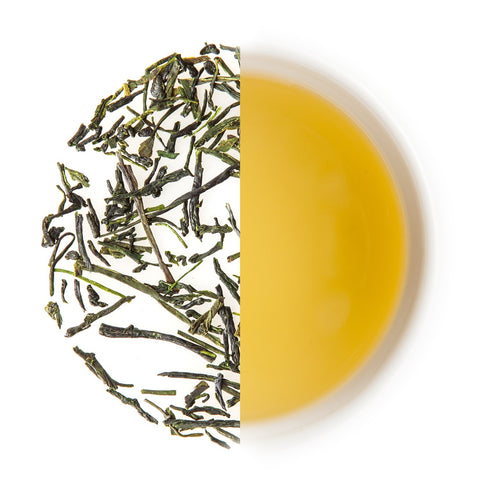
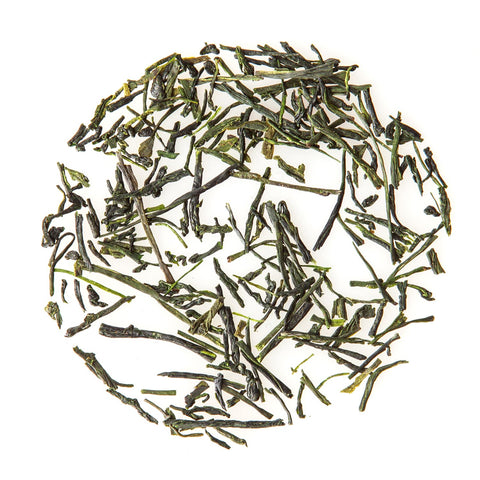
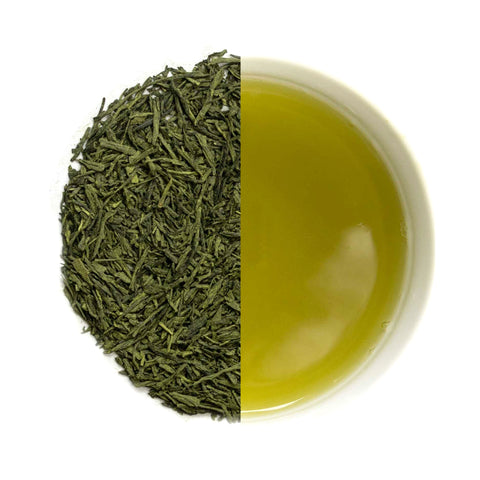
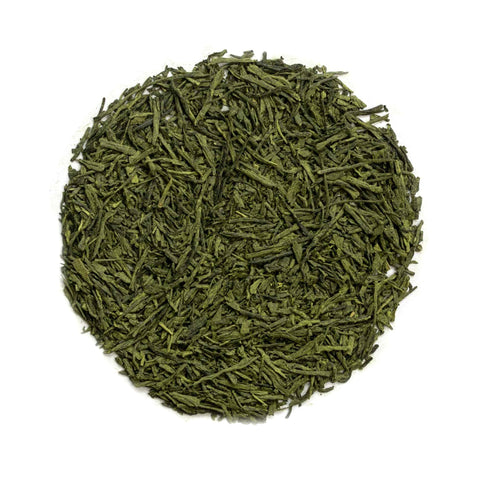
With Japanese green tea, the distinctive needle shape of the leaves stands out in particular. The leaves have this shape because the tea used to be rolled by hand during processing with a "back and forth" motion, which created long tea needles. The Japanese apparently liked the evenly shaped, long needle leaf, so special machines still imitate this rolling motion today.

Storage of green tea
Green tea is especially valued for its fresh and lively character, which is why it should also be drunk as fresh as possible. In Japan, a tea is considered no longer fresh after 3 months, although we think that's a bit exaggerated. It's important to store the tea dry and above all protected from air so that the leaves don't oxidize further. It's also best to keep Japanese green teas in the fridge – that way the tea stays fresh for up to a year and keeps its full aroma!
Preparation of green tea
Polar bears and green tea have one thing in common: they don't like it too hot. If you brew your green tea with water that's too hot, you draw too many bitter compounds out of the leaves and your drink might taste a bit unpleasant. To get the very best out of your hot drink, we recommend a water temperature of 70-80 degrees for sencha and kukicha, and for particularly fine varieties such as gyokuro only 60 degrees.
You can prepare this Far Eastern drink either in a classic teapot the "Western way" or in the traditional Japanese one-handed teapot. With the Western method, we recommend steeping 6 g of tea leaves in 500 ml of water for 2 minutes; a second infusion is possible. With the traditional method, you should steep 3 g of tea leaves per 100 ml of water for 1.5 minutes. Up to four infusions are possible, and you should extend the steeping time by 30 seconds with each infusion. Enjoy!